

Spice Packaging That Protects Flavor: A Buyer's Guide
A spice pack has two jobs: shield the contents from damp air and hold onto their aroma, while catching a shopper's eye. Here's how to pick one that does both.
A jar of chili powder that has turned into a solid, scentless brick a few weeks after purchase is rarely a recipe problem. Nine times out of ten, the packaging let air and humidity in.
Spice packaging carries a double load. It has to guard flavor and keep out moisture, and it's also your brand's first handshake with the shopper. Below we cover the four decisions that matter most: format, film, print, and budget.
Where should you start when picking spice packaging?
There's no universal answer, because the right pack depends on a few variables. What are you packing? How much shelf life do you need? Where will the product be stored, and who is the end customer?
Protection comes first. Humidity and oxygen are what degrade spices, so the film needs to keep both out. The seal is next on the list, since a leaky seal cancels out even the best film. Only then should you weigh size, format, graphics, and price.
Keep in mind that not every spice is equally fragile. Whole seeds such as cumin tolerate a fair amount. Ground chili and turmeric are far touchier: they cake in humid air, lose color under light, and give up their aroma quickly. A pack that works for one may let the other down.
Which pouch formats work best for spices?
Flexible packaging is the default for most spice companies. It weighs little, takes print well, and costs less to ship than glass. Here are the formats you'll see most often.
Stand-up pouches
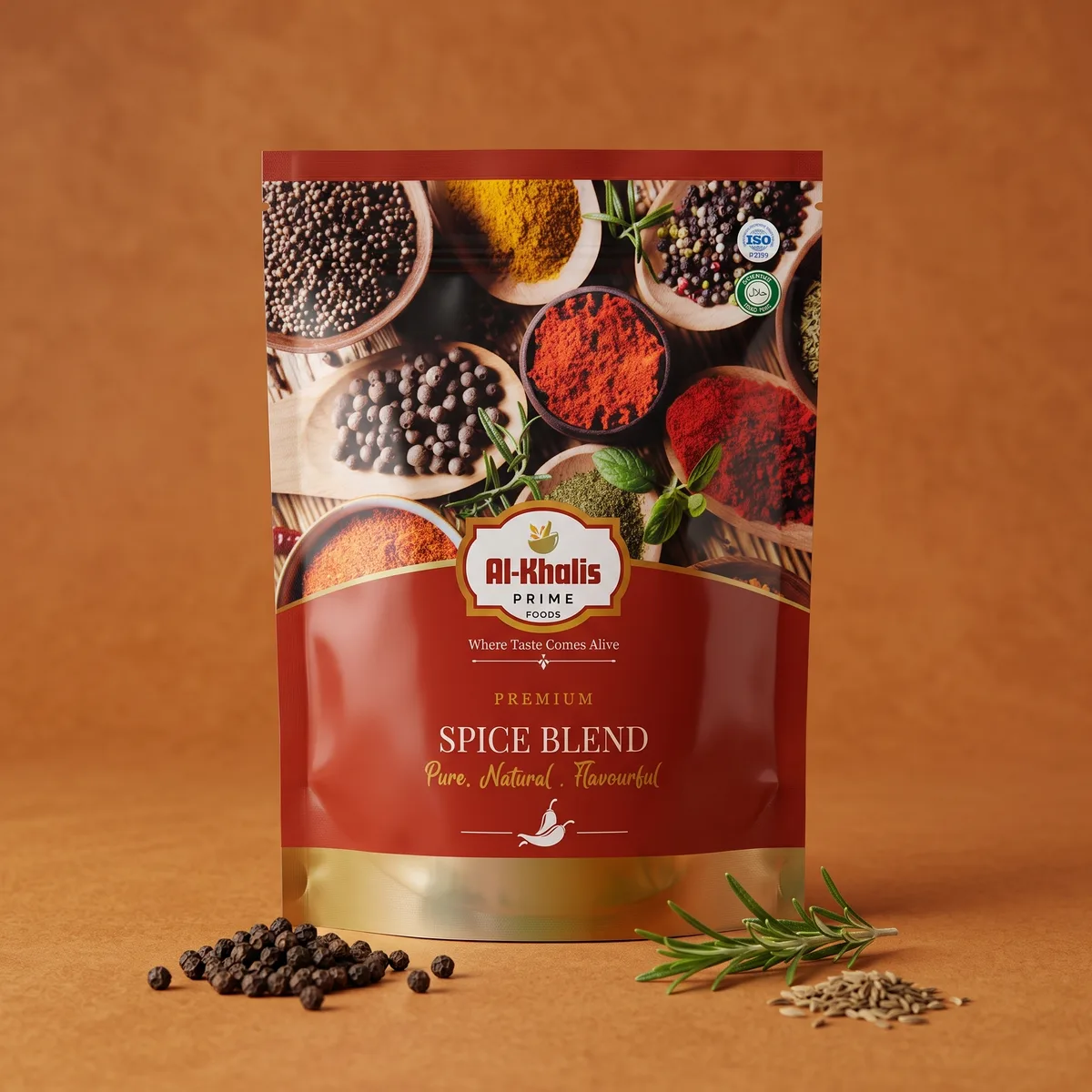
A stand-up pouch holds itself upright, which helps it get noticed on a crowded shelf. The front panel is large enough for strong branding, and a zipper lets customers close the pack again between uses. It's a safe pick for most retail spice lines.
Center-seal pouches
Simple and practical, center-seal pouches are a natural fit for powders. They're available in a wide range of sizes and leave space for printed information, but they won't stand on their own.
Four-side-seal pouches
With seals on every edge, these suit small, compact packs. Whether they're right for you comes down to fill weight and pack dimensions.
Printed packaging films
Running an automatic filling line? You can order printed film on the roll, slit to fit your equipment. Confirm the specifications with your supplier before placing the order.
| Pouch type | Best fit | Keep an eye on |
|---|---|---|
| Stand-up pouch | Branded retail packs | Zipper quality, if reclosing matters |
| Center-seal pouch | Powders and everyday packs | Won't stand upright |
| Four-side-seal pouch | Small, sealed packs | Depends on fill size and weight |
| Printed film roll | Brands with filling equipment | Has to suit your machine |
Your best format depends on the spice, your filling method, and the level of protection you need.
Prefer to see samples first? Call +1 (415) 985-5597 or email hs.enterprises4921@gmail.com and let us know what you're packing.
What material keeps spices fresh?
Spices suffer when they're exposed to humidity, oxygen, heat, or light. That's an even bigger concern in places like the Gulf Coast, where summer air stays heavy and storm season keeps humidity high for weeks on end.
The majority of spice pouches are made from laminated film, meaning several layers bonded into one so each layer can handle a specific task. A metallized layer improves resistance to light and moisture, with the level of protection depending on the film build. Adding aluminum foil raises protection further, at a higher price. Standard plastic films range widely in strength and barrier, and multilayer structures blend materials to meet particular requirements.
Kraft bags, glass jars, and rigid plastic tubs also show up in stores. Kraft has a natural look but generally needs an inner barrier. Glass works for premium or gift lines, though it's heavy and costly to ship. For day-to-day retail and wholesale, flexible pouches are usually the stronger choice.
Whatever direction you go, insist on food-grade packaging and ask your supplier to confirm it's suitable for food contact. Don't assume on food safety. Elevate Packages supplies flexible packaging in a range of material structures and barrier levels, so you can match the pack to the spice.
What should a well-made spice pack do?
A few qualities count for more than the rest.
- Block moisture so the powder stays loose and dry
- Hold in aroma so the spice smells right when it's opened
- Seal reliably, with heat-sealed pouches tested for leaks
- Use materials approved for food
- Come in a size that fits what you sell
- Include a zipper if customers will dip into it over several weeks
- Carry clean, legible printing
- Stand up to handling and shipping without damage
How well a pack delivers on all of this depends on the material, the pouch design, and the quality of manufacturing.
Does packaging design really move spice sales?
It does. Shoppers scanning a packed shelf make up their minds in seconds, and they reach for the pack they can read at a glance.
Make the product name prominent and choose type that's legible from a few feet away. Pick colors that fit your brand and make the spice inside obvious. Keep your design consistent across the whole range so repeat buyers can find you quickly.
Labeling deserves attention as well. Include net weight, ingredients, lot number, best-by date, and storage guidance, and confirm the labeling rules that apply where you sell. Sharp printing makes the pack feel more credible. Elevate Packages produces custom printed flexible packaging, so your pack can reflect both the product and the brand.
How do you keep spice packaging costs under control?
Lowest price and best value aren't the same thing. A cheap pouch that lets chili powder cake up will cost you in returns and customer trust.
Before ordering, work through this list:
- Lay out materials and specs next to each other
- Choose a pouch size that matches your product
- Ask what the minimum order quantity is
- Factor in printing and production costs
- Make sure the pouch runs on your filling equipment
- Request samples before committing to a large order
You're weighing protection, appearance, production, and packaging cost against each other. A reliable supplier will help you strike the right balance.
FAQs
What's the best way to choose packaging for spices?
Begin with the product. Consider the shelf life you need, the storage conditions, and your budget, then select a material and format to suit.
What material works best for spice packaging?
No single material wins every time. Laminated, metallized, and multilayer films are popular because they keep out moisture, light, and oxygen. The right one depends on the spice and your target shelf life.
Which pouch style suits spices best?
Stand-up pouches are a retail favorite because they stand on the shelf and can include zippers. Center-seal pouches work well for many powders, and four-side-seal pouches suit small packs.
How does packaging keep spices fresh?
Mainly by keeping moisture and oxygen out and maintaining a tight seal. A resealable zipper helps once the pack has been opened.
Why does moisture protection matter so much?
Moisture makes spices cake, weakens their aroma, and can lead to spoilage. Fine powders such as chili and turmeric are the most vulnerable.
Can flexible packaging be used for spices?
Yes, provided the film offers the right barrier for your spice and the seals are strong.
What information belongs on a spice pack?
Product name, net weight, ingredients, lot and best-by details, storage directions, and your contact information. Check the labeling requirements in your market as well.
How does packaging extend spice shelf life?
It slows the three main threats: moisture, oxygen, and light. A stronger barrier and a better seal keep the spice fresh for longer.
Final thoughts
Picking spice packaging boils down to a handful of straightforward questions. What does this spice need to stay fresh? Which format suits the way you sell? And what combination of protection, appearance, and cost makes sense for your business?
Price alone shouldn't decide it. Get samples, fill them with your real product, and test the seals and barrier yourself. A pack that looks great in the store but fails in the customer's pantry won't earn a second purchase.
Want a hand? Talk to Elevate Packages about custom flexible packaging for your spice line. Call +1 (415) 985-5597 or email hs.enterprises4921@gmail.com.